Following the publication of my article, “Working with People with a Psychiatric Diagnosis”, in the October 2025 edition of the British Association of Counselling and Psychotherapy’s (BACP) Healthcare Counselling and Psychotherapy Journal, I am creating a series of courses for mental health professionals – including psychotherapists, psychologists and counsellors – on working with clients with a psychiatric diagnosis.
The first course in this series is on depression. By 18th June 2026, there will be more than 32 hours of audio-visual material within the course. I will continue to upload further modules every 7-10 days.
A 35% introductory discount price applies for a limited period. Click here to access this discount.
One module from each the first three sections of the course is available to you right now to review, just to give you a flavour of the course. These modules have "Preview" towards the right side within the curriculum which is set out below.
Comments about the course to date from therapists who have enrolled:
"Amazing the amount of work you have completed thus far"
"I am a very big fan of your work as you know".
These courses will increase mental health professionals’ understanding and confidence in working with people with a psychiatric diagnosis.
There are four sections within this course: The curriculum is set out below.
1.A setting out of the current understanding of the psychiatric diagnoses.
2.A critique of this current understanding of the psychiatric diagnoses.
3.The presentation of a detailed trauma- and psychological understanding of the psychiatric diagnoses.
4.Working psychotherapeutically with people with a psychiatric diagnosis.
There is also a group chat feature, moderated by me, so you will be able to engage with me on an ongoing basis within the group of other course participants for further discussions and questions.
A 35% introductory discount price applies for a limited period. Click here to access this discount.
One module from each the first three sections of the course is available to you right now to review, just to give you a flavour of the course. These modules have "Preview" towards the right side within the curriculum which is set out below.
Get started now!
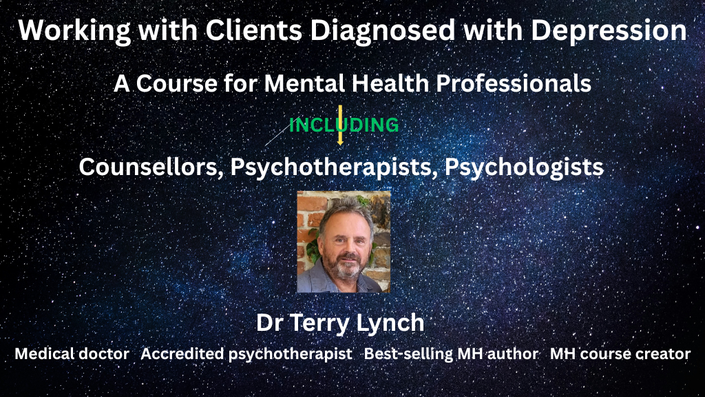
This is a major comprehensive course, which will provide you with a rich and deep understanding of all aspects of and relevant to depression, and working with people either diagnosed with depression, or likely to be so diagnosed.
You will receive a CPD certificate upon completion of this course.
Course price:
This price of this course is Euro 399.00 (equivalent in other currencies). 35% introductory discount available for a limited period, see above.
Refund:
Given that the creation of this course will be ongoing over the coming months, I am giving a no-quibble full money back guarantee for a period of three months from purchase date.
Course Curriculum
-
Start2.1a. Depression as a medical disease/medical illness; A brain disease/brain disorder; Biological in origin and nature - 1. (70:05)
-
Start2.1b. Depression as a medical disease/medical illness; A brain disease/brain disorder; Biological in origin and nature - 2. (121:01)
-
Start2.2a. Depression as a brain chemical imbalance: A critique - 1 (70:05)
-
Start2.2b. Depression as a brain chemical imbalance: A critique - 2 (56:16)
-
Start2.3a. Depression as a genetic - and therefore medical - illness: A critique - 1. (60:19)
-
Start2.3b. Depression as a genetic - and therefore medical - illness: A critique -2. (71:18)
-
Start2.4a. Depression as a mental illness, mental disorder, mood disorder. A critique - 1. (56:04)
-
Start2.4b. Depression as a mental illness, mental disorder, mood disorder. A critique - 2. (50:50)
-
Start2.5. Clinical depression. A critique. (68:42)
-
Start2.6. Depression and inflammation. A critique. (49:50)
-
Start2.7. Can depression be cured? (32:19)
-
Preview2.8a. The process of diagnosis of depression. A critique - 1. (55:34)
-
Start2.8b. The procession of diagnosis of depression. A critique - 2. (59:31)
-
Start2.8c: The process of diagnosis of depression. A critique - 3. Logical fallacies - 1. (72:27)
-
Start2.8d: The process of diagnosis of depression. A critique - 4. Logical fallacies - 2. (62:18)
-
Start2.8e: The process of diagnosis of depression. A critique - 5. (88:41)
-
Start2.8f: The process of diagnosis of depression. A critique - 6. (70:41)
-
Start2.8g: The process of diagnosis of depression. A critique - 7. (63:53)
-
Start3.1. Introduction (54:26)
-
Start3.2: The Wounding to Wounded Self Framework. (46:19)
-
Start3.3. Wounding. (18:53)
-
Start3.4. Shock. (38:29)
-
Start3.5. Distress, in many forms. (46:52)
-
Preview3.6. Weakened, weakenedness. (36:11)
-
Start3.7a. Self-protection strategies/self-defence mechanisms/coping strategies - 1. (49:39)
-
Start3.7b. Self-protection strategies/self-defence mechanisms/coping strategies - 2. (64:19)
-
Start3.8a. Choices, decision-making, mindsets-1. (62:02)
-
Start3.8b. Choices, decision-making, mindsets-2. (52:50)
-
Start3.8c. Choices, decision-making, mindsets-3. (44:52)
-
Start3.9. The wounded - reduced sense of - self. (64:30)
Your Instructor
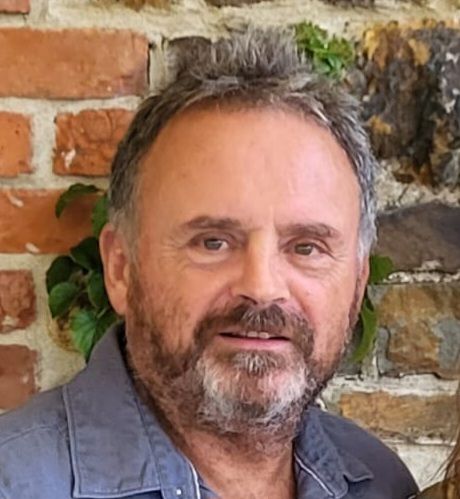
Terry's own life experiences and his life as a mental health activist, medical doctor, psychotherapist and mental health author have brought him to a level of understanding of mental health that is unusual if not indeed exceptional.
Terry Lynch has played a prominent role in mental health both nationally and internationally. For a nine-year period, he was appointed by the Irish Department of Health and Children to key national mental health groups - The Expert Group on Mental health Policy (2003-6) which formulated A Vision for Change, Ireland’s official mental health policy document; The Independent Monitoring Group for A Vision for Change (2006-9); the Second Monitoring Group for A Vision for Change (2009-12).
Terry Lynch was the only mental health professional to be appointed to the three Groups named above. In addition, he was also appointed by the CEO of the Irish Health Service Executive (HSE) to the Irish Health Service Executive's Mental Health Expert Advisory Group (2006-8).
Terry is the author of 4 books: Prescribed Drug Dependence (Kindle, 2018); Depression Delusion Volume One: The Myth of the Brain Chemical Imbalance (2015); Selfhood: A Key to the Recovery of Emotional Wellbeing, Mental Health and the Prevention of Mental Health Problems, (2011); and best-seller Beyond Prozac: Healing Mental Distress (2004).
He has appeared regularly in the national media in Ireland and beyond.


Course Curriculum
-
Start2.1a. Depression as a medical disease/medical illness; A brain disease/brain disorder; Biological in origin and nature - 1. (70:05)
-
Start2.1b. Depression as a medical disease/medical illness; A brain disease/brain disorder; Biological in origin and nature - 2. (121:01)
-
Start2.2a. Depression as a brain chemical imbalance: A critique - 1 (70:05)
-
Start2.2b. Depression as a brain chemical imbalance: A critique - 2 (56:16)
-
Start2.3a. Depression as a genetic - and therefore medical - illness: A critique - 1. (60:19)
-
Start2.3b. Depression as a genetic - and therefore medical - illness: A critique -2. (71:18)
-
Start2.4a. Depression as a mental illness, mental disorder, mood disorder. A critique - 1. (56:04)
-
Start2.4b. Depression as a mental illness, mental disorder, mood disorder. A critique - 2. (50:50)
-
Start2.5. Clinical depression. A critique. (68:42)
-
Start2.6. Depression and inflammation. A critique. (49:50)
-
Start2.7. Can depression be cured? (32:19)
-
Preview2.8a. The process of diagnosis of depression. A critique - 1. (55:34)
-
Start2.8b. The procession of diagnosis of depression. A critique - 2. (59:31)
-
Start2.8c: The process of diagnosis of depression. A critique - 3. Logical fallacies - 1. (72:27)
-
Start2.8d: The process of diagnosis of depression. A critique - 4. Logical fallacies - 2. (62:18)
-
Start2.8e: The process of diagnosis of depression. A critique - 5. (88:41)
-
Start2.8f: The process of diagnosis of depression. A critique - 6. (70:41)
-
Start2.8g: The process of diagnosis of depression. A critique - 7. (63:53)
-
Start3.1. Introduction (54:26)
-
Start3.2: The Wounding to Wounded Self Framework. (46:19)
-
Start3.3. Wounding. (18:53)
-
Start3.4. Shock. (38:29)
-
Start3.5. Distress, in many forms. (46:52)
-
Preview3.6. Weakened, weakenedness. (36:11)
-
Start3.7a. Self-protection strategies/self-defence mechanisms/coping strategies - 1. (49:39)
-
Start3.7b. Self-protection strategies/self-defence mechanisms/coping strategies - 2. (64:19)
-
Start3.8a. Choices, decision-making, mindsets-1. (62:02)
-
Start3.8b. Choices, decision-making, mindsets-2. (52:50)
-
Start3.8c. Choices, decision-making, mindsets-3. (44:52)
-
Start3.9. The wounded - reduced sense of - self. (64:30)